A sympathetic and enjoyable profile of Watford's Jay DeMerit in the October 16 Sports Illustrated can be found here, here, and here.
I was sympathetic too, until the last paragraph:
During his trip home over the summer, DeMerit spent a day in the recording studio with some old friends who own an indie music label in Minneapolis. The resulting track, a guitar-screeching ode to Watford called "Soccer Rocks," celebrates the fairy-tale story of an Everyman and his underdog team who somehow make it to the Premier League:
Let me bring your dream to you/Show you all what you could do/Soccer rocks!
Just what the world needs: A guitar-screeching ode to Watford.
Wednesday, November 01, 2006

To Elevate the Spirits
The Web site of the Promenade Plantée, a roughly three-mile promenade that runs along the top of an abandoned 19th-century railroad viaduct through urban neighborhoods in eastern Paris from the Place de la Bastille to the Bois de Vincennes.
Judgement
A brief interview with the phenomenally talented Kathleen Judge at Gapers Block.
Anyone know what a gapers block is?
Filthy answers only, please.
Anyone know what a gapers block is?
Filthy answers only, please.
Tuesday, October 31, 2006
How To Get Over FA Cup Disappointment
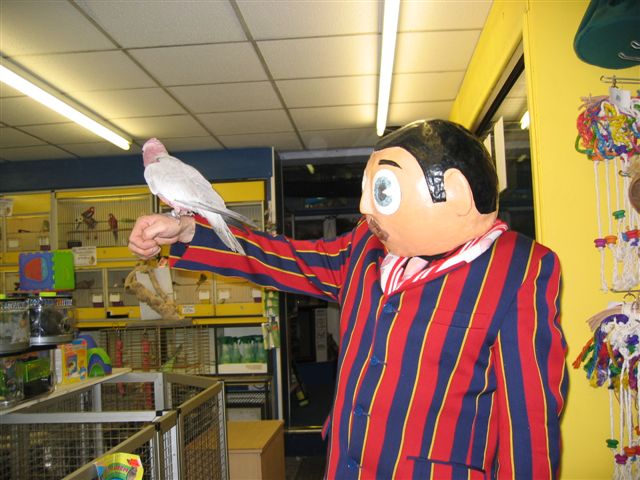

1.Watch Matt Damon get his brains blown out in the new Scorsese film
2. Get drunk watching The Nightingales play like never before
3. Go on a tour round Timperley with a celebrity guide.
4. Have a Sunday Lock-in. In a pet shop.
Friday, October 27, 2006
Thursday, October 26, 2006
A Sign of the Times
The annual Culchie Festival this year takes place within the Greater Dublin Area.
Makes sense, I suppose. That's where all the culchies are these days.
Makes sense, I suppose. That's where all the culchies are these days.
Wednesday, October 25, 2006
Rush Limbaugh Says Christopher Reeve Faked Disability, Death
Not quite. But he has accused Michael J. Fox of exaggerating his symptoms of Parkinson's Disease for political gain.
You just can't trust these actors, can you?
You just can't trust these actors, can you?
Stop the Carnage on Ireland's Roads: Legalize Cannabis
Young lads with fuck all else to do, driving like idiots around the country roads, fueled up on testosterone and boredom, are going to get into trouble one way or another. The Darwinist in me says, "Let 'em; natural selection will pick off the stupid and leave more food and air for the rest of us." The libertarian in me says, "Who are you to interfere? They knew it was dangerous when they got behind the steering wheel. If they want to risk killing themselves, mind your own business." But the lily-livered weak-kneed liberal in me says, "Drug 'em so they can't even crawl to their cars. Far better to have a nation of placid young boys giggling on the sofa and all the driving done by Domino's than to have a bunch of naive kids bombing round the laneways scaring the cattle, smashing into trees, and holding up the traffic while some poor fecker has to scrape their charred bodies off the tarmac."
I'm just being practical is all. Coughs not coffins, munchies not mayhem. You know it makes sense.
hat tip: Mrs. Sweary.
*update*: An afterthought. Ministers and policymakers could do worse than read Norbert Elias's Technization and Civilization (unavailable online but abstracted here and reviewed here), paying particular attention to the statistics on road accidents in first and third world societies. One could argue that the sort of barbarity we are seeing on the roads might have been predicted with some accuracy, given the "civilizing" advances that have taken place in some areas of Irish life, such as increased wealth and greater access to private transport, while other technical and cultural factors, such as bad infrastructure, macho adolescent posing, and the requisite sophisticated circumspection and self-control needed to drive on newly busy roads, have not yet caught up. This is Elias's argument, as I understand it, and is to be expected wherever new "technologies" appear on the scene and are taken up en masse by a society or by one particular sector of it.
Tuesday, October 24, 2006
*Shudder*
I just learned from reading Normblog that one of my contemporaries at the LSE, indeed, someone I remember quite well, is now an OBE and writes a column for the Times.
I'd feel like a right underachiever but for the fact that the honours system stands for everything I despise. Not to mention the contempt I would be held in by my dad if I ever had anything to do with a Murdoch product. He won't even have Sky in the house.
I'd feel like a right underachiever but for the fact that the honours system stands for everything I despise. Not to mention the contempt I would be held in by my dad if I ever had anything to do with a Murdoch product. He won't even have Sky in the house.
But How Will They Ever Make Owen Wilson as Handsome as David Ervine?

Vince Vaughn practices his best West Belfast accent on seasoned thesp Gerry Adams during shooting at the weekend for the U.S. version of Give My Head Peace.
pic from the Beeb.
Monday, October 23, 2006
Anthrax Finds a New Drummer
Artist and woodworker Christopher Niall “Pascal” Norris recently died of anthrax poisoning at the age of 50. Born in Edinburgh, Scotland, Norris was the son of a skilled cabinetmaker who showed early talent in woodworking and music and studied violin under Leonard Friedman, director of the Scottish Baroque Ensemble. A graduate of Edinburgh Art College, he subsequently began making musical instruments and other items, which he kept in his workshop in Hawick in the Scottish borders. It has been suggested that Norris may have contracted anthrax from a dead badger that he found at the side of the road and which he skinned to make two drums.
A Failure of Imagination
Don't take this as a lapse in discipline on the part of a committed atheist, merely a snort of frustration at the inability of self-appointed spokespeople to present our case with anything like the required subtlety. Terry Eagleton, who may or may not share my views on the nonexistence of a transcendent being, eviscerates Richard Dawkins's latest publication in a review in the London Review of Books. For a respected "thinker" (I hesitate to use the word "intellectual" not because of my contempt for the term but for Dawkins's apparent unwillingness to do the work required to qualify as one) Dawkins lacks any sense of nuance. At least Eagleton understands, thanks perhaps to his Marxist training as much as his Catholic childhood, how much good can come from religion, whether intentional or not.
"Jesus, who pace Dawkins did indeed ‘derive his ethics from the Scriptures’ (he was a devout Jew, not the founder of a fancy new set-up), was a joke of a Messiah. He was a carnivalesque parody of a leader who understood, so it would appear, that any regime not founded on solidarity with frailty and failure is bound to collapse under its own hubris. The symbol of that failure was his crucifixion. In this faith, he was true to the source of life he enigmatically called his Father, who in the guise of the Old Testament Yahweh tells the Hebrews that he hates their burnt offerings and that their incense stinks in his nostrils. They will know him for what he is, he reminds them, when they see the hungry being filled with good things and the rich being sent empty away. You are not allowed to make a fetish or graven image of this God, since the only image of him is human flesh and blood. Salvation for Christianity has to do with caring for the sick and welcoming the immigrant, protecting the poor from the violence of the rich. It is not a ‘religious’ affair at all, and demands no special clothing, ritual behaviour or fussiness about diet. (The Catholic prohibition on meat on Fridays is an unscriptural church regulation.)
Jesus hung out with whores and social outcasts, was remarkably casual about sex, disapproved of the family (the suburban Dawkins is a trifle queasy about this), urged us to be laid-back about property and possessions, warned his followers that they too would die violently, and insisted that the truth kills and divides as well as liberates. He also cursed self-righteous prigs and deeply alarmed the ruling class.
The Christian faith holds that those who are able to look on the crucifixion and live, to accept that the traumatic truth of human history is a tortured body, might just have a chance of new life – but only by virtue of an unimaginable transformation in our currently dire condition. This is known as the resurrection. Those who don’t see this dreadful image of a mutilated innocent as the truth of history are likely to be devotees of that bright-eyed superstition known as infinite human progress, for which Dawkins is a full-blooded apologist. Or they might be well-intentioned reformers or social democrats, which from a Christian standpoint simply isn’t radical enough."
Far simpler and more faithful (forgive the pun) to history to recognize, I think, that it is organized religion that is responsible for many of the crimes that Dawkins finds faith guilty of, and, were he willing to delve into sociological texts as well, he might be even more disposed to identify the culprit NOT specifically as religious faith but the institutionalization of (often but not necessarily hierarchical) relations between human beings (I suspect Sartre's Critique of Dialectical Reason might be beyond Dawkins for now, but even an elementary study of state formation and tribal dynamics might teach him how relations of interdependency and ritual declarations of kinship can atrophy to the point that they become exploitative). Dynamics that outlive their usefulness or their organic place in a society degrade and dissolve or else need to be sustained by the re-creation of the conditions that gave rise to their necessity (a climate of fear, for instance) or else by the demand for obedience and faith to tradition. This isn't a phenomenon exclusive to religion: It applies to all situations in which human beings forge agreements with one another and co-operate towards a collective end. That Dawkins fails to see the essentially social nature of religion in order to focus upon its "irrationality" is precisely what makes atheists appear to be patronising dogmatists no better than the fundamentalists they claim to condemn.
Okay. Off the high horse. Here's some nonreligious awe to provide some inspiration, empathy, and food for the imaginations of dogmatic materialists.
"One of the most astonishing discoveries of the last decades, revealed by exploration of space, nearby celestial objects, and especially meteorites that fell to Earth, is that many of the chemical building blocks of life form spontaneously throughout the universe. Organic chemistry, so named because it was believed to be a prerogative of living organisms, has turned out to be the most widespread and banal chemistry: the chemistry of carbon."
With thanks to the guys at D2W and the Trots.
Update: Gary Wolf has an article in Wired Online about the "New Atheists" (individuals such as Dawkins, Daniel Dennett, and Sam Harris), with some reflections and astute comments on the rigidity of their thinking. Worth a look at.
Not The Hardest Decision Ever

Having won first prize in Frank's Fantastic Raffle I was given a choice of
1) A DVD (which I'd already got) or
2) Frank's new Single "Free Download" which I'd downloaded for free on Friday or
3) little mark e. smith's body
Nuff said
Friday, October 20, 2006
Anything You Can Do (Except Give Birth)
A nice spoof site here for the MacInnes and Porritt Institute, purportedly conducting research into Cyclical Non-Uterine Dysmenorrhea (CNUD), or male menstrual cramps. There's a very amusing film about CNUD and its role in history, with chapter titles such as "The Bowels of History" and "The Artist Formerly Known as Cramps."
At least, I hope it's a spoof.
At least, I hope it's a spoof.
Lost in Translation
I recall that when Jimmy Carter visited Poland, his interpreter translated Carter's "great love for" the Polish people as "great lust," as well as using the wrong version of the verb "to leave," so that his guests understood him to have left the United States for good, so I DO realize that mistakes can be made.
But what could Vladimir Putin have possibly said about rape that was funny?
But what could Vladimir Putin have possibly said about rape that was funny?
Thursday, October 19, 2006
Boys in the (Robin) Hood
When I was at school in Solihull, it was fags behind the bike sheds.
Maybe I should rephrase that.
Maybe I should rephrase that.
Oh Blimey, it's Beckett. Brilliant!
Frank Sidebottom and friend take on the oeuvre of Samuel Beckett (scroll down).
Next on the List
Having successfully acquired a reasonably priced copy of Crossroads in the Labyrinth, the next book I want to get hold of is this one.
It's described here as "the weirdest book in the world." I was hoping to get it for Martin for Christmas, but at these prices I suspect he'll have to make do with Curb Your Enthusiasm Series 6.
It's described here as "the weirdest book in the world." I was hoping to get it for Martin for Christmas, but at these prices I suspect he'll have to make do with Curb Your Enthusiasm Series 6.
Wednesday, October 18, 2006
Shame He Couldn't Sing Like Her, Too
Bono says he looked like Nana Mouskouri before U2 employed stylist Lola Cashman.
Just look at the state of him outside court. If I was Nana Mouskouri, I'd sue the pair of them.
Just look at the state of him outside court. If I was Nana Mouskouri, I'd sue the pair of them.
It's the Cock's Bollocks
More from our Far East correspondent:

I never realized chickens were such strong swimmers!

I never realized chickens were such strong swimmers!
Tuesday, October 17, 2006
You lucky, lucky bastards
From the Three Johns MySpace page:
Due to the overwhelming response to the recent short tour, The Three Johns will be returning to play at The Windmill, Brixton, London, on Saturday, 18th November!
All those people who didn't get to see them at The Windmill last time, now have another chance to enjoy watching the original lineup of The Three Johns in all their glory!
As an extra special treat, Jon Langford and Sally Timms of The Mekons will also be playing on the same night, as will the excellent Striplight.
Now if that's not a gig and a half, I don't know what is!
It's only a month away, so get those tickets booked early, if you don't want to be disappointed!
God was Drunk Part 2
And on Sunday I saw Brothers of the Head, a technically excellent film which didn't really fulfil its potential. Clive Langer's music and the live gigs are very convincing as possible pub rock/punk re-enactments and the verite style of the supposed documentary is only spoilt by one or two actors who play it like a TV drama. There are a few good laughs in it but the ending didn't have the impact they probably thought it would, not on a cold-hearted cynic like me at least.
Now if only they'd got Dowd and White to play the leads.
Now if only they'd got Dowd and White to play the leads.
God was Drunk Part1
Last night I went to see Johnny Dowd and Jim White perform as Hellwood, not expecting too much as the new CD is a bit restrained and Mr. Dowd has always been a bit of a misery when I've seen him before, but blimey were they good. The life they put into the new songs and the fun they had whilst playing them was a joy to experience. Mr. Dowd had a permanent grin ("I've not been this happy since a hog ate my baby brother!"), and the band treated us to some funky instrumentals and even a Thelonius Monk cover. And how on earth was the drummer playing bass? I thought £12.50 was a bit steep, but it turned out to be a bargain (what with the Metrolink breaking down and not having to pay any fare).
See them live if you can but be wary of the CD: one for fans only.
See them live if you can but be wary of the CD: one for fans only.
Monday, October 16, 2006
Eureka!!
Arrived in the post today, a copy of Cornelius Castoriadis's Crossroads in the Labyrinth, a book I'd almost given up on locating at an affordable price. In the end it cost me about £30, still a lot of money for a paperback but in reasonable condition, and it seems like there may still be one or two copies still out there, if anyone else is looking.
Yeah, right.
Also in the post today, this. Which book do you think will get read first?
Yeah, right.
Also in the post today, this. Which book do you think will get read first?
Thursday, October 12, 2006
The Sublime and The Ridiculous

Hotel Florida, Havana, March 2005.
I know there were those of you out there who were sceptical about this rather surreal event, despite previous proof of my credibility. Well, I finally managed to dig out photographic evidence. This was an otherwise deserted hotel restaurant in the centre of the city the night before we were due to fly back to Ireland.
Discretion forbids me to tell the full story behind this photo right now.
Discretion and lack of legal experience.
Oh yes, resist, if you can, comments along the lines of "you could be brothers" or "tuck your shirt in!"
Wednesday, October 11, 2006
Could THIS Be Galloway's Blueprint?
Just finished reading Tariq Ali's 1990 roman-a-clef Redemption, reviewed here by former Trot Louis Proyect.
At the heart of the novel is an extraordinary congress at which all the Trot sects around the world come together to plan their response to the collapse of "actually existing socialism." In the keynote speech, Ezra Einstein, the book's central character (based on Ernest Mandel), says,
"What then is to be done? The answer is obvious. We must move into the churches, the mosques, the synagogues, the temples, and provide leadership. Our training is impeccable. Within ten years I can predict we would have at least three or four cardinals, two ayatollahs, dozens of rabbis, and some of the smaller Churches like the Methodists in parts of Britain could be totally under our control."
Ali may not be a great writer, but he knows his arse from his entryist.
Tuesday, October 10, 2006
Sorrow Is Nothing But Worn-Out Joy
Trailer for Kelly Reichardt's new film, Old Joy, starring Will Oldham and Daniel London.
And Where Was McManus While All This Was Happening?
Two armed members of the Garda Siochana got pissed in the pub while they were meant to be providing security outside the U.S. embassy, then got into a scrap over whose round it was, before returning to work, where the scrap was resumed.
"Abandoning a post, drinking on duty and brawling in public are all serious offences in the garda discipline code."
You couldn't make this shit up!!!
"Abandoning a post, drinking on duty and brawling in public are all serious offences in the garda discipline code."
You couldn't make this shit up!!!

Monday, October 09, 2006
Sound and Fury
I went to the Cornerhouse with Kev last night to see Zidane:A 21st Century Portrait and came away thinking that either the close camerawork and editing can't do a player justice or that Zizou is even lazier and one-footed than I imagined. The choice of subject is odd, as Zidane is probably one of the quietest and unanimated professionals in the game today; if the sound track is to be believed he limits himself to a few shouts for the ball and the occasional smile (when Bobby Carlos cracks a funny, probably something about using his left foot more often), until he finally gives full rein to his emotions and runs twenty yards to twat an opponent. If anything the film highlights how detatched he is from his team mates and his frustration at not being involved, which is his own fault for not getting stuck in. In one of the rare subtitled comments from the man himself (I thought there would be more of his philosophy and possibly in voiceover), he refers to the pitch as "the green square"! Well, Zou, it'd be a rectangle if you bothered to tackle back!
I must say I did enjoy watching a footy match from these new angles, but I wouldn't want to watch a live game in this way; the only problem I had with the film was the sound design (which Kev thought was excellent, fool), because they seemed to have dubbed the thwack of boot on ball to every pass and shot whether it was a gently rolled free-kick or mindless hump upfield, and they could pick up the noise of footfall of every player, apparently.
Still, it's worth seeing if just to piss off Mark Kermode by keeping it in his cinema for a few weeks.
You Know You're in Trouble When Even the Lettuces Are Worried
Just don't tell the broccoli, you know how nervous they get.
Thursday, October 05, 2006
Short Book Shorts
Haven't given you the benefit of my dubious judgement on books for a while. That doesn't mean I haven't been reading, mind you. The trains are still late, slow, and busy. Here, then, is a quick review of my most recent reads:
Holidays on Ice, by David Sedaris: Generally, I like Sedaris's stuff (God knows I've bought enough of them) but this slight book of just six articles felt like he was reaching. Okay, they're all around the theme of holidays, so I guess the book is cobbled together, meaning works of varying quality, but I can't help wondering if this book was brought out just to milk the cash cow a little bit more. That said, the piece in which he reviews school nativity plays in the style of the NYT drama critic is very funny indeed.
The Magic Christian, by Terry Southern: Every now and then I check my Amazon wish list to see if any of the books on it have dropped in price to under a quid. This had, so I bought it. Now I know why it was so cheap.
The movie is much better. As is Southern's book Blue Movie, which I had read before this one. Will I read any more? Hmm.
Where Did It All Go Right?: Growing Up Normal in the 70s, by Andrew Collins: I liked Collins's book about his college years, Heaven Knows I'm Miserable Now, because he arrived in London only a couple of years after me, so I recognized the zeitgeist. This book deals with his childhood in Northampton in the 70s. As such, it consists mostly of namedropping TV shows, sweets, comics, and toys from that era. In addition, a good proportion of the book is composed of extracts from his diaries as a teenager. I could have written that. I mean, literally, genuinely, I could have written it. If only I could have found idiots to publish it and pay me too.
Class, by Stephen Edgell: I studied Class, Status, Veblen and Bourdieu under Stephen Edgell at Salford, so I'd always promised myself I'd buy this one day; I had to wait 14 years before it became affordable. Despite being one of those Routledge Key Concepts books, it's a proper sociological text, in that it examines problems in operationalizing terms, conducting research into class and status and so on. Not as outdated as one might expect.
Merleau-Ponty: A Guide for the Perplexed, by Eric Matthews: Even though I read The Phenomenology of Perception years ago, I flatter myself by saying I got a good deal out of it, but I read this for more autobiographical information than to confirm my suspicions aboiut what I'd read before. It's increasingly clear to me that Merleau-Ponty is a better philosopher than Sartre in the same way that Camus is a better existentialist. But then, how does one define better? I just mean, I guess, that I empathize with them rather more on account of their arguments. Seeing through their eyes makes more sense to me than seeing the world through Sartre's (cue bad taste joke about Sartre's eyes).
Psychogeography, by Merlin Coverley: One of those Pocket Essentials books, giving an outline of the history of the term, including its precursors. Bored the shit out of me, yet many of the recommended Web sites at the back of the book are also to be found on our blogroll. What does that say about us?
The Pope's Children, by David McWilliams: Interesting pop sociology about demographic and cultural changes in Ireland over the last 20 or so years. Contains some surprising statistical information in its early pages then deteriorates into one of those cutesy roman a clef-type comments on contemporary society, reminiscent of The Sloane Ranger Handbook. How McWilliams stretched this idea out into 300-plus pages is beyond me. All the good stuff can be found in the early chapters.
I Only Say This Because I Love You, by Deborah Tannen: I've become addicted to sociolinguist Deborah Tannen's books. Even though they tend to overlap, each one covering some ground that features in one of the others, I defy you not to find yourself somewhere in her pages. Conversations between partners, mothers and daughters, men and women, brothers and sisters, they're all here. Informative and amusing.
The Politics of Illusion, by Henry Patterson: Traces the history of the republican movement's attempts to reconcile nationalism and socialism and explains not only why they failed but why such a reconciliation is in any practical sense impossible. A rather dry and worthy read but enlightening nonetheless.
Why Smart People Can Be So Stupid, edited by Robert J. Sternberg: Could it be because intelligence isn't the same as wisdom or experience? (cf: Emotional Intelligence, by Daniel Goleman) That's pretty much the conclusion arrived at in the articles by eminent psychologists collected here. Well, blow me.
Of course, Flaubert said it so much better in Bouvard and Pecuchet.
Bouvard and Pecuchet, by Gustave Flaubert: Two clerks come into an inheritance and decide to spend it on educating themselves about the world. Manage to blunder their way through their fortune, failing to recognize the importance of "organic" knowledge, or, if you will, knowledge of the world acquired through praxis. I immediately thought of the wonderful sculptures of racehorses made in his retirement by my father, who has spent his entire working life as a factory toolmaker. He was able to turn the garage at home into a foundry when he retired, and his phenomenal ability to turn three-dimensional casts and moulds over in his mind then make them real was a skill only available to someone who'd undergone years of hard graft doing the same sort of thing in the workplace with car parts and gas cookers.
At one point in the book, Bouvard and Pecuchet are attempting to cultivate an orchard, while referring to the best available books on the subject. Failing miserably, they lament that there appear to be different rules for each individual tree. Just so. Only experience can teach you what they are.
Running with Scissors, by Augusten Burroughs: Funny, but with a touch of the poor man's David Sedaris about it. About to be made into a movie, I believe. A tad excessive in kind of a James Frey way. I say that without wanting to cast aspersions on its accuracy, of course. Judge for yourself.
There now, that's a dozen to keep you going. And there'll be more, if Iarnrod Eireann doesn't get its act together, I warn you.
Wednesday, October 04, 2006
Class: The Other "Other"
" . . . lower-class students are defined as "other" not by those cultural hegemonies of race, gender, and sexuality that the academy prides itself on deconstructing, but by the norms of the academy itself. Embedded in its assumptions about the educational process is a panoply of middle-class ideas and ideals, including the systematic consideration of the un(der)educated, especially in the United States, as a subaltern group. Working-class pride would seem to have no place in academia, which by its very existence encodes class superiority, and where students are being prepared explicitly for white-collar jobs."
The rest is here.
The rest is here.
Dublin-Drogheda: It's the new Tokyo-Yokohama
"Reports this morning say the European Environment Agency has identified Dublin's urban sprawl as a "worst-case scenario" in city planning."
Breaking news.
Breaking news.
Advocate 971
Two articles of interest in the September 26 issue of GLBT magazine The Advocate:
"Wasting Away," by David Luc Nguyen, examines the extent of eating disorders among gay men in the United States.
"Targeted by Death Squads," by Doug Ireland, examines the targeting of gay men in Iraq by the Badr Corps (the military wing of the Supreme Council for the Islamic revolution in Iraq), which has marshaled death squads to engage in a campaign of "sexual cleansing."
Figurations
Links to pdf copies of Figurations, the newsletter of the Norbert Elias Foundation, can be found here.
Elias is, to my mind (but then what the fuck do I know?), one of the most important sociologists of the 20th century, alongside Pierre Bourdieu (have a look at Deborah Reed-Hanaway's Locating Bourdieu for an examination of Elias's influence on Bourdieu's work). His figurational or process sociology manages to combine vertical and horizonal (or synchronic and diachronic) analyses of society in a manner that Marxists would perhaps recognize as dialectical, but without any of the mumbo-jumbo Hegelianism and with plenty of empirically-based research (rather than sitting in a library all day cherry-picking the research of others). Eliasians offer a dynamic, insightful sociology of the emotions, of literature, of philosophy, of power, of gender (and of sport, curiously enough) that I would recommend to anyone willing to entertain genuine doubts about their own worldview.
Elias's wiki page is here, but it doesn't do his work justice.
Tuesday, October 03, 2006
Out of True
New Nightingales album, available as of yesterday. Track list here.
I'm particularly looking forward to hearing "UK Randy Mom Epidemic."
I'm particularly looking forward to hearing "UK Randy Mom Epidemic."
DPS: Report #3
Being the third and final part of a dérive through Dublin with a map of Paris.

Place Pigalle: Vibrant, albeit a little rundown, Pigalle tends to attract large groups of Americans, and, as a result, there is a great deal of anti-American feeling among the residents and artists. Much of the artwork was, frankly, disappointing: Most of it was impressionistic and amateurish, some artists being reduced to scrawling phrases such as "We Are All Hezbollah Now" on their canvases and waving them over the heads of their rivals in order to attract buyers. Many of the paintings looked identical, as though mass-produced by some cynical, exploitative organization intent on cowing visitors into submission by turgid repetition. It may work with the young, gullible, and ideologically naive, but for this aesthete it left a decided taste of melancholia on the palate.
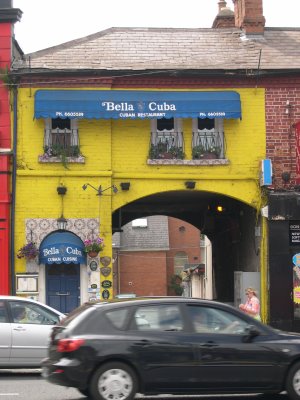
Les Invalides: Very cramped, and I couldn't for the life of me locate Napoleon's tomb. He must have been a very small man for them to bury him in here. What's more, the atmosphere has actually deteriorated since the smoking ban. Many of the war veterans still resident seemed rather churlish and begrudging, unable to smoke and undoubtedly annoyed at having their meals disrupted by my incessant requests for stories about torture in Algeria and my perhaps overenthusiastic demands to see their wounds. I was asked to leave when, as a demonstration of my good faith, I showed the collected diners a few wounds of my own.

Le Chabanais: Quite by chance, my dérive came to an end at Paris's most famous temple of love, one of the famous "Huis Clos" that Sartre wrote about so eloquently. Le Chabanais was supposedly shut down after the war, but the police clearly turn a blind eye to goings-on here or else partake of the delights on offer, because activity was constant during my visit, the corridors lined with rooms behind the doors of which god alone knows what goes on. I looked in vain for the famous "Fellatio Seat" that was constructed for the future Edward VII. The concierge denied all knowledge of its existence, even after being offered big notes: Discretion is everything here.
It is said that, once upon a time, fully one-third of all men visiting Le Chabanais were "juicers," which is to say men who derived their pleasure from sucking the semen of the previous client from the whore's vagina. I confess that this is not a pleasure that I share, but as I wandered the corridors in the last throes of my journey and inspected the demeanour of the respectable gentlemen disporting themselves there, I could not help but wonder which of them had only minutes earlier had their mouths full of another man's come. Generally I find it's the ones you least expect.
News of further activities of the Dublin Psychogeographical Society to follow.

Place Pigalle: Vibrant, albeit a little rundown, Pigalle tends to attract large groups of Americans, and, as a result, there is a great deal of anti-American feeling among the residents and artists. Much of the artwork was, frankly, disappointing: Most of it was impressionistic and amateurish, some artists being reduced to scrawling phrases such as "We Are All Hezbollah Now" on their canvases and waving them over the heads of their rivals in order to attract buyers. Many of the paintings looked identical, as though mass-produced by some cynical, exploitative organization intent on cowing visitors into submission by turgid repetition. It may work with the young, gullible, and ideologically naive, but for this aesthete it left a decided taste of melancholia on the palate.

Les Invalides: Very cramped, and I couldn't for the life of me locate Napoleon's tomb. He must have been a very small man for them to bury him in here. What's more, the atmosphere has actually deteriorated since the smoking ban. Many of the war veterans still resident seemed rather churlish and begrudging, unable to smoke and undoubtedly annoyed at having their meals disrupted by my incessant requests for stories about torture in Algeria and my perhaps overenthusiastic demands to see their wounds. I was asked to leave when, as a demonstration of my good faith, I showed the collected diners a few wounds of my own.

Le Chabanais: Quite by chance, my dérive came to an end at Paris's most famous temple of love, one of the famous "Huis Clos" that Sartre wrote about so eloquently. Le Chabanais was supposedly shut down after the war, but the police clearly turn a blind eye to goings-on here or else partake of the delights on offer, because activity was constant during my visit, the corridors lined with rooms behind the doors of which god alone knows what goes on. I looked in vain for the famous "Fellatio Seat" that was constructed for the future Edward VII. The concierge denied all knowledge of its existence, even after being offered big notes: Discretion is everything here.
It is said that, once upon a time, fully one-third of all men visiting Le Chabanais were "juicers," which is to say men who derived their pleasure from sucking the semen of the previous client from the whore's vagina. I confess that this is not a pleasure that I share, but as I wandered the corridors in the last throes of my journey and inspected the demeanour of the respectable gentlemen disporting themselves there, I could not help but wonder which of them had only minutes earlier had their mouths full of another man's come. Generally I find it's the ones you least expect.
News of further activities of the Dublin Psychogeographical Society to follow.
Thursday, September 28, 2006
BBC Fucking Around Again
Bans new Sparks single because of "rude" title.
I wonder what they'd make of "Up All Night," by Afternoon Penis (on Our Mouth Records), or "Kick the Pregnant," by Boulder (from their Ripping Christ LP), which, to be fair, even John Peel refused to play.
I wonder what they'd make of "Up All Night," by Afternoon Penis (on Our Mouth Records), or "Kick the Pregnant," by Boulder (from their Ripping Christ LP), which, to be fair, even John Peel refused to play.
Here's One You'll All Know

I was never a big Pink Floyd fan but Track 19 brought the memories flooding back.
Aren't They All?
The very wonderful Irish Corruption site has become Public Inquiry. Blogroll adjusted accordingly. Here's today's post.
Wednesday, September 27, 2006
Sympathy for Psychopaths
An article at Wired by Suzanne Leigh highlights new research into psychopathic behaviour suggesting that
"psychopathy is a learning disability that makes it difficult for psychopaths to stop themselves from pursuing harmful behavior."
Leigh highlights the research of Joseph Newman, chairman of the psychology department at the University of Wisconsin at Madison, and contributor to the recently published book The Psychopath: Theory, Research and Practice.
I don't see a great deal that's new in this research, except that Newman distinguishes between psychopaths and sociopaths and argues that psychopaths do not have the high fear threshold sometimes ascribed to them (this ascription is open to contention, in any case, since sociopaths in wartime can usually be expected to desert in order to save their own skins rather than, say, go looking for the enemy just for kicks). Newman's use of the term psychopath also appears to coincide exactly with the use of the term sociopath by Robert Hare and Martha Stout, who do not use Newman's distinction (Newman argues that sociopathic behaviour is learned, psychopathic behaviour is the result of "faulty wiring").
I'd buy the book and find out more if it wasn't so ridiculously expensive.
DPS: Report #2
Being the second part of a dérive through Dublin with a map of Paris.

Rue Gay Lussac: "Marxism is the opiate of the intellectuals." "All Power to the Dromedariat!" "Under the Paving Stones, the Metro!" These are just a few of the slogans that adorned the walls of Paris during The Events of 1968. They were the work of a group of quasi-revolutionaries known as the sans-culottes, students who preferred to spend their money on mind-bending drugs and so-called "pop" music than on trousers and haircuts. Some of the most famous photos from that period were taken on the rue Gay Lussac, and although I was slightly bending the rules of the dérive by hopping into a taxi, I felt that I had to pay homage to that site, if only to see how much it had changed in the intervening years.
As you can see, the burghers of Paris have taken Hausmannian steps to ensure that the cobbles of Gay Lussac will not be crowbarred free again for use as projectiles against the gendarmerie. They have submerged the entire street beneath water and blocked the pavements with trees. Reflect on this for a moment, because it tells us something about the class struggle: The bourgeoisie would sooner destroy all possibility of engaging in trade and commerce than provide weapons for the disaffected classes to express their antipathy. They will no longer provide the rope with which to hang them: They would sooner drown us all.

Basilica of Sacré-Cœur: One of the aims of psychogeography is to examine and explore the way in which particular geographical sites and environments impact on our feelings, our thoughts, our emotions. I have visited this monument to piety many times, and on every occasion, I have left it feeling sick. Perhaps it is just the fresh air hitting me after all that incense, but I suspect it is more likely my revulsion at the garishness of the basilica itself and what it stands for. Built in 1884 to "expiate the crimes of the communards," in particular the killing of a bunch of nuns, the basilica dominates the northern skyline of the city, taunting Parisians, daring them to rebel again. It is my fervent hope that the next time the citizens rise up in revolutionary fervour and ask themselves "What is to be done?" they will look up, see this monstrosity, and say "Ah yes. We must kill the nuns."

The Eiffel Tower: In his book Mythologies, structuralist fuckwit and entrepreneur Roland Barthes observed that the Eiffel Tower has the advantage of being the only place in Paris from which you cannot see the Eiffel Tower. He also explained how the tower transforms "culture into nature," turning the city beneath one, all those manmade streets, boulevards, statues, knocking shops, into a vast jungle which one surveys much as God might survey his creation. Looking down at Paris from this great height (roughly 3 km), one appreciates that Barthes wasn't entirely screwing around for the sake of it. The city does indeed look almost vegetal, a Deleuzian field of rhizomes, blossoming, exploding, coiling back on itself, disappearing underground at Montparnasse only to burst forth, unpredictably, over by the Opera Garnier in a cascade of one-way streets and traffic accidents, most obviously that laundry van that did for Barthes himself. Irony indeed. And was it not the Parisians who invented irony? How else to explain that, of all the people I ever met, they have the least joie de vivre. As Merleau-Ponty might have said, Go figure.
Part three to follow.
Tuesday, September 26, 2006
Joke of the Day
Courtesy of the brilliant Manuel Estimulo, told here.
Mel Gibson walks into a bar.
Ouch!
It was a bar mitzvah.
Mel Gibson walks into a bar.
Ouch!
It was a bar mitzvah.
Monday, September 25, 2006
DPS: Report #1
The first event in the calendar of the Dublin Psychogeographical Society took place last Friday, a challenging, insightful, and fun day out for all concerned. I met at the Omphalos of Irish society, Holles Street hospital, at 11 a.m., armed only with a Tupperware box filled with tuna sandwiches, a hip flask of Black Bush (for self-lubrication and bribery of prostitutes and small children), and a 1987 map of Paris. The obvious discrepancies in the cities' contours notwithstanding, I was able to make fruitful use of my provisions. Moreover, when those provisions were found lacking, I was able to call on the help of the natives. Parisians have a reputation for being rude and/or condescending, but throughout my wanderings I found them inquisitive, friendly, helpful, and only a little repulsive.

Champs-Élysées and Louvre: I had been advised that it was possible to purchase the most exquisite Crêpes Suzette on the Champs-Élysées from street vendors, but I was disappointed to find one of Europe's most famous boulevards to be underwhelming in nearly every respect: Far shorter and grubbier than I had anticipated, and populated only by a small group of street urchins, two of them on mountain bikes, one of them kicking a plastic football. One of the mountain bikers was blind, however, which I found charming and most agreeable.
The Louvre is dark and unprepossessing, the interior without the natural light characteristic of other galleries of a similar size and reputation. The works on show were nothing to write home about either, so I haven't, but the gallery did serve alcoholic refreshments, a progressive step, in my opinion, indicative of France's relaxed attitude toward art. At lunchtime, the gallery was packed with office workers, demonstrating the average Parisian's thirst for culture that I had only previously known by repute.

The Marais: Formerly the Norwegian Quarter of Paris, following the expulsion of the Inktomi people from that country in 1580. It is unusual to find such huge tracts of Tundra in the centre of a modern European capital. Moose roamed freely, unembarrassed and unmolested.
Incidentally, the individual just ahead of me dressed in traditional Inktomi costume is Marcel, my illiterate native guide for this part of the Dérive. He refused swigs from my hip flask but devoured my tuna sandwiches greedily, a sign that not all has been lost and corrupted by Western decadence, I think. Marcel is not his birthname, but adopted out of reverence for the famous Inktomi explorer Marcel Addenammer.

Père Lachaise Cemetery: At last, I located part of the "real" Paris, untouched by tourists and largely unknown to outsiders. Buried here are such Parisian luminaries and low-lifes as Karl Marx, Jean-Paul Sartre, Orson Welles, and Milo O'Shea. And given the levels of cholesterol presented on each plate, I have to say, I'm not at all surprised. The sausage, bacon, eggs, chips, liver, onions, beans, and tomatoes with sliced white bread and butter and a pot of tea for one more than made up for my failure to find the grave of Samuel Beckett (I had been told that it was somewhere toward the back, near the toilets) and gave me a chance to sample authentic French cuisine, rather than the effete bourgeois rubbish on offer at such rip-off joints as La Garotte and Oulipo. Further investigation is required to find out exactly how French women manage to stay so slim on this diet, although I have to say that evidence for this conundrum was thin on the ground, if you'll forgive the pun. French women are just as big-boned, sweaty, and swarthy as other European women. So, at least, were my observations last Friday. Perhaps the more svelte and less generously proportioned Parisian ladies come out after dark. More on that, anon, when I have researched that aspect of contemporary French society in more detail.
Report #2 to follow.
Friday, September 22, 2006
A Beacon in a Cesspool
Thursday, September 21, 2006
Men Like Monkeys
Or in this case, a three-million-year-old girl.
"The paleontologists who are announcing the discovery in the journal Nature today said the 3.3-million-year-old fossils were of the earliest well-preserved child ever found in the human lineage. It was estimated to be about 3 years old at death, probably female and a member of the Australopithecus afarensis species . . . An analysis of the skeleton revealed evidence of a species in transition, the scientists said in interviews yesterday.
The lower limbs supported earlier findings that afarensis walked upright, like modern humans. But gorillalike arms and shoulders suggested that it possibly retained an ancestral ability to climb and swing through the trees.
“Her completeness, antiquity and age at death make this find unprecedented in the history of paleoanthropology,” said Zeresenay Alemseged, the Ethiopian leader of the discovery team and a researcher at the Max Planck Institute for Evolutionary Anthropology in Leipzig, Germany."
Wednesday, September 20, 2006
Some History

The Three Johns performing at the Green Room Theatre, Manchester, Friday, September 15.
This was the only shot I took. The rest of the night I spent bopping. Of course.
Monday, September 18, 2006
Let's Hope It Tastes Mostly of Grass
A follow-up to this post, from our Asia correspondent, presents a list of cocktails on offer in one bar in Manila:


More Fun Than Brain Surgery
The Three Johns session on Marc Riley's Friday night show can be heard here.
Wednesday, September 13, 2006
The Secret of Our Success: Johnnies
Malcolm Gladwell has an interesting take on the reasons for the success of Ireland's "Celtic Tiger" economy in an article in the August 28th issue of The New Yorker:
"In the past two decades . . . Ireland has gone from being one of the most economically backward countries in Western Europe to being one of the strongest: its growth rate has been roughly double that of the rest of Europe. There is no shortage of conventional explanations. Ireland joined the European Union. It opened up its markets. It invested well in education and economic infrastructure. It’s a politically stable country with a sophisticated, mobile workforce.
But, as the Harvard economists David Bloom and David Canning suggest in their study of the “Celtic Tiger,” of greater importance may have been a singular demographic fact. In 1979, restrictions on contraception that had been in place since Ireland’s founding were lifted, and the birth rate began to fall. In 1970, the average Irishwoman had 3.9 children. By the mid-nineteen-nineties, that number was less than two. As a result, when the Irish children born in the nineteen-sixties hit the workforce, there weren’t a lot of children in the generation just behind them. Ireland was suddenly free of the enormous social cost of supporting and educating and caring for a large dependent population. It was like a family of four in which, all of a sudden, the elder child is old enough to take care of her little brother and the mother can rejoin the workforce. Overnight, that family doubles its number of breadwinners and becomes much better off.
This relation between the number of people who aren’t of working age and the number of people who are is captured in the dependency ratio. In Ireland during the sixties, when contraception was illegal, there were ten people who were too old or too young to work for every fourteen people in a position to earn a paycheck. That meant that the country was spending a large percentage of its resources on caring for the young and the old. Last year, Ireland’s dependency ratio hit an all-time low: for every ten dependents, it had twenty-two people of working age. That change coincides precisely with the country’s extraordinary economic surge."
Locating the Victims of "Posttraumatic Haemorrhage"
The current issue of Archaeology magazine features an article (abstract here) on the work of the Association for the Recovery of Historical Memory, a team of around 50 archaeologists, anthropolgists, and forensic doctors who are devoted to uncovering the stories of the victims of fascist Spain.
Teams of diggers from the organization are excavating and exhuming the mass graves throughout Spain in which lie the skeletons of those who were executed under Francisco Franco's regime, and they are also collecting the oral and written testimonies of Franco's victims. According to Luis Rivero, a biological anthropology Ph.D. student who volunteered at one such dig, the exhumations are not about looking for the guilty parties but about recovering history, bringing the subject out into the open, and providing closure after many years of silence.
Teams of diggers from the organization are excavating and exhuming the mass graves throughout Spain in which lie the skeletons of those who were executed under Francisco Franco's regime, and they are also collecting the oral and written testimonies of Franco's victims. According to Luis Rivero, a biological anthropology Ph.D. student who volunteered at one such dig, the exhumations are not about looking for the guilty parties but about recovering history, bringing the subject out into the open, and providing closure after many years of silence.
Tuesday, September 12, 2006
Political Blogging Event
Also courtesy of the Manchizzle:
Political Bloggers: A Panel at Urbis 24/9
I'm going to be moderating a panel discussion at Urbis later this month - and yes, it's about blogging! Details are below. Please come if you're remotely interested, or pass this on to someone who might be. Or both.
Political Bloggers and the New Media Landscape
On 24 September 2006, to coincide with the Labour Party Conference (Sun Sept. 24 – Thurs Sept 28), Urbis will host a panel discussion that will explore the way political bloggers are changing the media.
In the UK, bloggers are increasingly driving the news, and providing a robust and democratic new forum for political debate. A consortium of influential UK political bloggers has just set up their own advertising venture, an indication that blogging has started to reshape the media market. These self-appointed pundits are both reviled as ranting rumormongers and hailed as the prophets of the digital revolution. So what's the truth – are bloggers setting the news agenda, or is this mostly hype? And will political bloggers put traditional journalists out of work, or can the two work together?
Panelists include:
Norman Geras: blogger, author and professor emeritus at Manchester University, where he taught in the school of government for several years. His mostly political blog, Normblog was voted best UK Blog at the 2005 Weblog awards. He is also an author of the Euston Manifesto.
Martin Stabe is an online reporter for The Press Gazette. He is a frequent contributor to the gazette's journalism weblog, Blog Watches Dog and he also maintains a blog at www.martinstabe.com, which deals with politics across the Atlantic and across the channel.
Bill Jones blogs at Skipper, which covers UK politics, parliament and the press. He lives in Stockport and is a semi-retired lecturer at Manchester University specializing in British Politics. He is the editor of the Politics Today series of books published by Manchester University Press.
The event will be run as an informal panel discussion, followed by a question and answer session. Starts at 4pm. Free, booking not required
For more information, get in touch on themanchizzle at gmail.com.
Manchester Blog Awards . . .
. . . are up and running. Nominate your favourite Mancunian blog/blogger here.
GSOH
The Guardian Weekend on Saturday was a special issue devoted to comedy that managed to avoid being in the least bit funny. The entire magazine featured one decent joke, from mediocre Irish comic Jason Byrne, which I paraphrase here because the Web site sees fit to omit it:
A salesman knocks on the front door of a house, only to be confronted by a small boy in a dressing gown, smoking a cigar, and sipping from a large glass of brandy. "Hello, little boy," says the salesman. "Is your mother or father in?" The little boy says, "Does it fucking look like they're in?"
Ah well. You had to be there.
Monday, September 11, 2006
Friday, September 08, 2006
Or better yet, your sister IN your shirt
Marco Materazzi reveals what he actually said to Zinedine Zidane.
He doesn't score enough for a big lad
What's Paul Robinson done wrong that warrants docking him 4 points?
http://football.guardian.co.uk/News_Story/0,,1864399,00.html
http://football.guardian.co.uk/News_Story/0,,1864399,00.html
Thursday, September 07, 2006
At Home with the Intelligentsia. No 28: Gilles Deleuze

(Full image shows Deleuze lost in the changing rooms of the men's clothing department in Rackham's, Guildford.)
Wednesday, September 06, 2006
Monday, September 04, 2006

Friday, September 01, 2006
We Will Wobble
News from the I.W.W. Web site (left) that baristas at the Logan Square Starbucks store in Chicago have joined the IWW Starbucks Workers Union. The baristas have issued a set of demands that included a living wage, guaranteed work hours, and the reinstatement of IWW baristas fired for organizing activity. They are also the first U.S. workers outside of New York City to declare union membership at the world's largest coffee chain.
Thursday, August 31, 2006
Particularly Twins Who Hate Each Other
An interesting article from today's New York Times on the role, or lack thereof, of genes in ageing.
"Life spans, says James W. Vaupel, who directs the Laboratory of Survival and Longevity at the Max Planck Institute for Demographic Research in Rostock, Germany, are nothing like a trait like height, which is strongly inherited.
“How tall your parents are compared to the average height explains 80 to 90 percent of how tall you are compared to the average person,” Dr. Vaupel said. But “only 3 percent of how long you live compared to the average person can be explained by how long your parents lived.”
“You really learn very little about your own life span from your parents’ life spans,” Dr. Vaupel said. “That’s what the evidence shows. Even twins, identical twins, die at different times.” On average, he said, more than 10 years apart."
Wednesday, August 30, 2006
Prince Phillip went on an impromptu walkabout this morning when he smacked his thumb with a hammer
An enjoyable image I just thought I'd share with my readers by way of introducing this review by Jah Wobble of the Pocket Essentials guide to Psychogeography, by Merlin Coverley.
I spotted the review, incidentally, at Ballardian, now blogrolled left, the place for all things, well, Ballardian.
I spotted the review, incidentally, at Ballardian, now blogrolled left, the place for all things, well, Ballardian.
Tuesday, August 29, 2006
Never and Always, But Particularly September 15th
New dates announced for The Three Johns: Friday, September 15th at the Green Room, Manchester, with Band(ism) and The Firebrats, and Monday, September 18th at the Windmill, Brixton, with Striplight.
When the Earth Aches
When the People Need
Call it Destiny
Call it Fate
Call it Stupid
Call it Fat
Reverberating down through Time
The Return of
THE THREE JOHNS
There is a legend that, in the 80s, when the nation was low and dishonorable, there came three men striding like giants across post-punk’s political dreamscape. Wading through mud, beating each other with guitars, THE THREE JOHNS brought a dirty shaft of gold into the lives of anyone they encountered. Now, in the time of awaiting, they have returned to lift your gaze back towards the Sun.
Hideout Block Party
Featuring The Ex, Sally Timms, Calexico, Killdozer, CocoRosie and many many more, September 8 to 10. More details here.
Agora Update
The latest update from the Cornelius Castoriadis/Agora International Web site carried a number of interesting pieces for those who are interested by those kinds of things.
We have received word of the death of Murray Bookchin on July 30, 2006. Bookchin (b. January 14, 1921), a former Trotskyist like Castoriadis, shared Castoriadis's advocacy of direct democracy and even preceded the latter in his concern with environmental issues. Castoriadis discussed Bookchin's municipally-based, ecologically-informed, anarchist views briefly in Crossroads in the Labyrinth. They both joined the Editorial Advisory Board of Society & Nature in the 1990s. When Bookchin and his partner Janet Biehl resigned from this journal in 1997--considering it, among other things, too "Castoriadian"--Agora International's David Ames Curtis wrote a reply, "On the Bookchin/Biehl Resignations and the Creation of the New Liberatory Project" http://www.agorainternational.org/dnweb1.html, at Castoriadis's request and with his approval, the text appearing only a year and a half later in censored form in the successor journal, Democracy & Nature. It was on account of D&N's censorship effort that Castoriadis had determined to leave its Editorial Advisory Board as soon as the censored version appeared, a decision he was not able to carry out, however, due to his own intervening illness and death. Bookchin later wrote Curtis a conciliatory letter acknowledging that Castoriadis's views deserved further examination, but ill health and other priorities kept Bookchin from realizing his aim of writing such a text.
We have received word of the death of the historian and social activist Pierre Vidal-Naquet on July 29, 2006. Vidal-Naquet (b. July 23, 1930), a sympathizer of Socialisme ou Barbarie since the mid-1950s, formed a discussion group in the early 1960s with Castoriadis, Claude Lefort, Jean-Pierre Vernant and others called the "Cercle Saint-Just" (later renamed the "Centre de Recherches et d'Études Sociales et Politiques," or CRESP). It was Castoriadis who came to the defense of Vidal-Naquet in a 1979 polemic with Bernard-Henri Lévy--with Castoriadis's contribution now available as "The Vacuum Industry" in The Rising Tide of Insignificancy (The Big Sleep) http://www.notbored.org/RTI.html. And it was Vidal-Naquet who soon thereafter introduced Castoriadis for his election to the École des Hautes Études en Sciences Sociales. Castoriadis joined Clisthène l'Athénien authors Vidal-Naquet and Pierre Lévêque at a March 27, 1992 Georges Pompidou Center meeting instigated by Agora International, organized by Stephane Barbery, David Ames Curtis, Clara Gibson Maxwell, and Pascal Vernay, and moderated by Christian Descamps of the Espace Séminaire Philosophie on the occasion of the two-thousand-five-hundredth anniversary of Cleisthenes' reforms in ancient Athens. Vidal-Naquet's oration at Castoriadis's funeral on January 3, 1998 later appeared in translation as his "Homage to Cornelius Castoriadis" in the review Common Knowledge.
Monday, August 28, 2006
Wasn't He in The Undertones?
Darren is added to the list of worthies/reprobates subjected to Norm's curiosity.
Quote of the Week
Glenn Roeder on Inter Milan
"They don't keep players who aren't any good."
So just remind me where you just got Martins from, Glenn.
"They don't keep players who aren't any good."
So just remind me where you just got Martins from, Glenn.
Thursday, August 24, 2006
But What Does It Say in Braille?
DUBLIN, Ireland (AP) - Irish atheists are celebrating as a "natural miracle" the discovery of a pomegranate which, when cut open, revealed the phrase "There Is No God" in multicoloured seeds. The pomegranate was bought by local resident Aoife O'Sullivan from a greengrocers in Rathmines, South Dublin.
Andrew Cox of the Irish Association of Atheists commented that, "It only tells us what we've known for a long time, but while we discount divine intervention in the physical universe as an explanation for material phenomena, it's comforting to know that Nature is even-handed in the arbitrary messages She conveys."
Leaders of the country's Muslim community are less impressed. A spokesman said, "The pomegranate is a fruit through which Allah has traditionally spoken to Muslims. I have no doubt that this discovery is part of a series, the other members of which will complete the phrase with the words '...but Allah, and Mohammed is his prophet.'"
Followers have been instructed to buy up all available stocks of pomegranates in Ireland in order to locate the missing items. They can expect stiff competition, however, from the Irish Nietzsche Society, who anticipate finding the entire text of Thus Spake Zarathustra in pomegranate form.
Wednesday, August 23, 2006
MoMA and Dada
What about THAT for a title? Genius, eh?
Here's a look at some of the highlights of the exhibition “Dada: Zurich, Berlin, Hannover, Cologne, New York, Paris,” at the Museum of Modern Art, New York, from June 18 to September 11.
Here's a look at some of the highlights of the exhibition “Dada: Zurich, Berlin, Hannover, Cologne, New York, Paris,” at the Museum of Modern Art, New York, from June 18 to September 11.
Unborn Child Watched Over By Fred Basset

Tell me I'm wrong. The Daily Mail article suggests it's Jesus, but since when did the King of Kings have floppy ears?
Live Fast, Die Middle-Aged
Fifty-five-year-old Larry Grodsky, the best-known motorcycle safety expert in the United States, was killed instantly on April 8 when his motorcycle collided with a deer on a deserted West Texas highway. Grodsky, who wrote for Rider magazine and who ran several riding schools, was traveling back from the International Motorcycle Safety Conference.
His most recent article in Rider magazine, published posthumously, described how it should feel to brake properly under emergency situations.
His most recent article in Rider magazine, published posthumously, described how it should feel to brake properly under emergency situations.
Monday, August 21, 2006
Muslim Superheroes Save the World
The 99 is a new comic series featuring superheroes who possess godly attributes. Invented by Kuwaiti businessman Naif al-Mutawa, each superhero embodies a Muslim virtue, such as Jabbar the enforcer, Mumita the destroyer, and Bari the healer. Although inspired by Muslim values, The 99 is not a religious comic, and al-Mutawa says he has no desire to attract extremists of either conservative or liberal persuasions—preferring to reflect Islam's message of tolerance and diversity. Al-Mutawa's firm, Teshkeel Comics, is expected to publish four 99 series each month.
No Andy Gray, No Chris Kamara, and It Isn't Owned by Murdoch
That's Al Jazeera's Sports Plus channel, which some British pubs have taken to using for its coverage of Premiership footie.
"The Premier League says the only legal way to watch its soccer matches in a local commercial setting is through the British Sky Broadcasting Group, which is far more expensive than the foreign options.
“It’s illegal and it’s copyright theft,” said Dan Johnson, a league spokesman. “We sell to Sky, and they have the sole rights to show league matches."
Ah yes, I see. We have no choice.
Friday, August 18, 2006
Blood, Sweat and Beers: A Bloodshot Primer
The dulcet tones of Sally Timms explaining the attraction of Cowfolk Punk . . . or is Cowpoke Funk?
Wednesday, August 16, 2006
By Their Company Shall Ye Know Them
Bush reads Camus, too. Can it be any coincidence that the protagonist of the book shoots an Arab just for the sake of it?
Camus at Combat
I had the chance to identify my intellectual hero in the Normblog profile but didn't take it. Now I can: Albert Camus.
Here's a review by Joseph Frank (sign-up required), which appeared in the July 24 New Republic, of Camus at "Combat": Writing 1944–1947, edited by Jacqueline Levi-Valensi. The book features all of Camus' journalistic writings for the underground magazine. Both book and review are well worth a read.
Admit it. You all thought I was going to say Castoriadis, didn't you?
Monday, August 14, 2006
Newport Here We Come!!
The Three Johns will be headlining at the Newport Crow Point Festival on Saturday, September 16. Be there or Do the Square Thing.
Commuting as Indulgence
Norm has a brief but insightful and sceptical post here, in response to an article in the Times concerning research lauding the benefits of commuting. As someone who has lived a 10-minute walk from work and who now commutes 35 miles (8 minutes by car to train station, 55-minute train journey) to the same office, I reckon I’m familiar with the benefits and disadvantages of each option.
You might reasonably assume that a 10-minute walk through Georgian Dublin of a morning would be not just convenient but also uplifting, particularly given that part of that stroll included the leafy bank of the Grand Canal. And you’d be right. Indeed, I was even able to walk home at lunchtime, make myself a sandwich, and turn the TV on to watch the news, offering me a complete separation from work half-way through the working day. It also meant that, because the office has flex-time, I could choose to go into the office at 10 having had a long lie in, leave at 6, and still be home at a civilized hour for my evening meal before strolling down to Haddington Road or Toner’s for a couple of pints or further into town if there was a gig on worth catching. I could even have deigned to read a book, such was the scope of my options.
Why would I then choose to move out of city centre Dublin to Mornington, 35 miles north, a suburb of another city entirely, in fact (Drogheda)? Well, there’s the rub. For one thing, the size of a mortgage required to live in the city centre was preposterous, and indeed still is, whereas Mornington was, back then, at least, laughably undervalued, since the south of Dublin was still regarded as the most desirable area for commuters (especially Dalkey, Killiney, Bray). For another, the quality of life in the city centre rapidly deteriorated in the late 90s. Not only would there frequently be shouting or fighting in the street at 2 in the morning, but there were also people coming inside the front gate to have a piss, to throw up, to fuck prostitutes, or to eat their kebabs from Abrakebabra on Baggot Street. One of my good friends was hospitalised by a gang of thugs in Portobello, the streets were increasingly covered in dog shit and takeaway wrappers, and the local shops and pubs got more and more crowded as Dublin became the venue of choice for stag parties, hen nights, international business conferences, MTV Awards, the Tour de France, you name it.
By contrast, when we moved up north, we found Mornington to be quiet, secluded, friendly, and clean. We found a house just two minutes’ walk from the beach, the same distance from the mouth of the River Boyne, and close to the National Ecology Centre and specially designated wildlife preserves. Our commuting options are limited to the M1 and the train, but the train starts at Drogheda, one station down the line, so it is still almost empty when it arrives in Laytown, offering us a choice of seats (the Belfast Enterprise, which also stops at Drogheda, siphons off those commuters who want a quick trip in the morning). Rarely is the train packed to the point where those standing cannot comfortably move around, and although the train makes 6 stops before reaching Connolly Station, the trip along the coast is simply spectacular and relaxing. If you have the time in your working life to appreciate it, it is a genuine pleasure.
This trip is also the reason why I read much more than I used to. Living in town presented me with so many options that it was much too easy to plump for the least taxing, namely, allowing myself to be entertained by a band or a comedian or by several pints of Guinness, all of which involved the spending of cash I didn’t really have thanks to that fucking mortgage! Yes, I should have been reading more books back then and taking advantage of the spare time offered by the short commute, but that wasn’t how things worked. It’s only now, when I don’t have much choice (I have an mp3 player but regard listening to music as a waste of time – seriously!) that I find myself tearing through books at a rate of two a week, thanks to a lengthy and comfortable commute. Sure, I get home much later, (7.30 p.m. most days), but that only motivates me NOT to waste what time I have watching the TV. Instead, I’ll make the most of that time either writing, playing tennis and coaching the local youngsters, reading some more, or sitting in the back garden with a bottle of wine contemplating philosophy or the smell of the ozone from the Irish Sea. There’s a lot to be said for that long commute, trust me.
Apologies for such an eminently self-satisfied and bourgeois post on an ostensibly anarchist blog. But fuck it, even anarchists commute.
Legendary Local in Terrace Taunt
The few Stevenage fans who witnessed their team trounced by Alty 2-1 on Saturday were goaded with the chant "We take more to The Faulkners". For those not in the know, it ain't the biggest pub in town.
Friday, August 11, 2006
But You Heard It Here First
From the August issue of Chicago magazine, a special issue featuring the "Best of Chicago":
Best Ensemble
NEKO CASE'S TOURING BAND
Plaudits have been heaped upon Neko Case, the Humboldt Park alt chanteuse who early this year tipped into rock stardom with her fourth studio album, Fox Confessor Brings the Flood. But on her current tour, now looping across the United States and Europe, attention must be paid to the dream team behind her: Case's longtime collaborator Jon Rauhouse on pedal steel guitar; Devil in the Woodpile regular Tom V. Ray on upright bass; and New Pornographer vet Paul Rigby on banjo. The final jewel in the crown? The acclaimed jazz songbird Kelly Hogan lends her silky voice on backup vocals.
Thursday, August 10, 2006
Fun for All the Family at . . . ArmyWorld!!
From the Washington Post:
"Army officials say they are considering allowing a private developer to build a 125-acre entertainment, hotel and conference center complex next to a national Army museum at Fort Belvoir that could draw more than 1 million people a year to traffic-choked southern Fairfax County.
The possibility of adding what county officials call a military theme park arises as about 22,000 employees prepare to be transferred to Fort Belvoir in the next five years because of the federal base realignment and closure recommendations, designed to save $49 billion nationwide.
The Army is considering the entertainment venue to help offset the cost of the $300 million museum, which a spokesman said is scheduled to open in 2013. No federal funds are being sought for the museum, but Fairfax has donated $240,000.
A Florida developer has submitted an unsolicited proposal for a military theme park that would include the "Chateau Belvoir" hotel and an entertainment district with bars like the "1st Division Lounge" and several "4D" rides."
The rest is here.
Wednesday, August 09, 2006
Starbucks Union Message
"The Starbucks "investigation" of IWW member Daniel Gross concluded today with his termination after more than three years of organizing at the company. Daniel's expression of solidarity at a union picket line with co-worker and fellow union member, Evan Winterscheidt, was deemed threatening by Starbucks despite multiple eyewitnesses who confirm that Daniel merely asserted to District Manager Allison Marx that Evan should not be fired. With the termination of IWW members Daniel Gross, Evan Winterscheidt, Joe Agins Jr., and Charles Fostrom in less than a year, Starbucks has demonstrated conclusively its intense hostility to the right of workers to join a union.
To provide additional cover for the unlawful termination, Starbucks issued Daniel a blatantly discriminatory performance review today with negative ratings for things like, "not communicating partner morale issues to the Store Manager." The manager confirmed that morale issues included complaints about wages and working conditions. Last we checked, an employer may not mandate an employee to engage in surveillance of co-worker's protected activities.
Far from breaking our campaign, Starbucks has done the opposite. The current and former Starbucks workers who proudly carry the red Industrial Workers of the World membership card vow to redouble our efforts to achieve an independent voice on the job. The right to free association at work is fundamental and not subject to compromise. But to vindicate our right to union membership, we need support from you, the working class; the class that built this society with our sweat and indeed with our blood.
The multinational retailers like Wal-Mart, Starbucks, and Borders seek totalitarian control of the workplace. The way forward to reign in these massive corporations is a social movement of workers and community members. The Wobblies at Starbucks have proven that by taking direct action against the company over issues of concern to workers and by avoiding the skewed certification process of NLRB elections, baristas can improve their lives on and off the job. This strategy only works however, if the company incurs significant economic, political, and social costs when it violates the right to organize by terminating workers for union activity.
Take action with us sisters and brothers. Together we will win:
1) Do not spend your hard earned money at Starbucks until the company respects the right of workers to organize and reinstates Daniel Gross and the rest of the IWW baristas. Let the company know you are taking a stand by participating in the email action:
http://starbucksunion.org/node/1015
2) Obtain a resolution or pledge from your community group, labor union, or house of worship agreeing to stay way from Starbucks products until justice is done. Please send copies to starbucksunion@yahoo.com.
3) Hold a rally or leafleting action at Starbucks in support of the right to organize and in defense of the fired union baristas if you feel that's appropriate in your local community. Please check in with the baristas at the store beforehand to involve them in the action.
4) If you are a student, join the Justice from Bean to Cup! campaign launching this Fall to ensure Starbucks doesn't operate on campuses without reinstating the IWW baristas, respecting the right to organize, and making a meaningful commitment to Fair Trade. Get involved by e-mailing starbucksunion@yahoo.com.
5) Make a financial contribution to the IWW Starbucks Workers Union to ensure a continued independent voice for employees at the world's largest coffee chain. Send checks made out to "IWW Starbucks Workers Union" or well-concealed cash to:
IWW Starbucks Workers Union
347 Maujer St. Apt. #C
Brooklyn, NY 11206
www.starbucksunion.org
Monday, August 07, 2006
Every Wart and Wrinkle
Some scary close-ups of the Mekons at both of last week's gigs can be found here.
Friday, August 04, 2006
Subscribe to:
Posts (Atom)


